The Complete Guide to TETRA Antennas for Emergency Services

TETRA (Terrestrial Trunked Radio) has been the backbone of UK emergency services communications for over two decades. With the transition to the Emergency Services Network (ESN) well underway, the antenna requirements for emergency services fleet vehicles and infrastructure are in a period of genuine complexity. TETRA and ESN systems are running in parallel, and will continue to do so for the foreseeable future.
What Makes TETRA Antenna Selection Different
TETRA operates in the 380–400 MHz frequency band. At this frequency, antenna physical size is inherently larger than at cellular frequencies. A quarter-wave monopole at 390 MHz is approximately 19 cm — something that matters when specifying vehicle-mount solutions where profile and aesthetics are considerations. Low-profile TETRA antennas using loading coil designs offer reduced physical height while maintaining acceptable gain figures, and are widely used on police and fire vehicles.
Vehicle-mount TETRA antennas typically offer between 0 dBi and 5 dBi gain. Higher gain omnidirectional designs improve range in flat, open terrain but can cause issues in hilly or urban environments. For most emergency services vehicle applications, a balanced omnidirectional pattern with moderate gain is the practical optimum.
Omnidirectional vs. Directional for TETRA
Omnidirectional antennas are the standard for vehicle-mounted TETRA applications. They radiate and receive equally in all directions on the horizontal plane, which suits mobile platforms where the direction of the nearest base station is always changing.
Directional antennas have a role in fixed-site applications — for example, boosting TETRA coverage into a building, tunnel or remote site where the base station direction is known and fixed. Yagi-type directional antennas for TETRA can provide substantial gain but require accurate alignment and are not suitable for mobile use.
The ESN Layer: What It Adds
The Emergency Services Network operates on EE's 4G LTE network at standard cellular frequencies — primarily 700 MHz, 800 MHz, 1800 MHz and 2100 MHz. A fully ESN-capable vehicle installation therefore requires antennas covering both TETRA frequencies and the LTE bands used by ESN devices.
As noted in Panorama Antennas' public safety communications guidance: "300,000 frontline users will depend on ESN from the police, fire and rescue, and ambulance services, to the coast guard, local authorities, and utility services." The antenna infrastructure supporting those users needs to be reliable, well-specified and future-proof.
ESN Compliance: What to Check
Band coverage. ESN uses Band 20 (800 MHz), Band 3 (1800 MHz) and Band 1 (2100 MHz). Antennas must cover all relevant bands with adequate gain.
VSWR. For mission-critical communications, a VSWR of 2:1 or better is typically specified across the operating band.
Interference rejection. Emergency services operate in environments with significant RF noise. Antennas with good rejection of out-of-band interference improve reliability in congested RF environments.
Durability. IP67 rating or better is the baseline for most fleet specifications.
TETRA Isn't Going Anywhere Soon
The UK's Airwave TETRA network shutdown is currently targeted for 31 December 2029. For fleet managers and procurement teams, the implication is straightforward: specify antenna systems that support both TETRA (380–400 MHz) and the LTE bands used by ESN now, and you won't need to retrofit hardware when the full ESN transition completes.
View Renair's TETRA and ESN antenna range at renair.co.uk/products.
Frequently Asked Questions
What frequency does TETRA use in the UK?
TETRA for public safety in the UK operates in the 380–400 MHz band — a licensed, dedicated spectrum allocation for emergency services, separate from commercial cellular bands.
Do I need to replace my TETRA antenna when transitioning to ESN?
Your TETRA antenna can remain in place for TETRA communications. ESN communications require a separate LTE antenna (or a combination unit covering both). The addition of an LTE antenna for ESN is typically a simpler installation than a full antenna replacement.
Can a single antenna cover both TETRA and LTE?
Yes — wideband combination antennas capable of covering 380–400 MHz (TETRA) and 700 MHz–2100 MHz (LTE) are available. These reduce the number of antennas on the vehicle roof, which is particularly useful for vehicles with limited roof space.
How long will the Airwave TETRA network remain active?
The current target for Airwave shutdown is 31 December 2029, though this date has been revised previously. All emergency services vehicles should maintain TETRA capability until the transition is fully confirmed and complete.
Understanding the Innovative Technologies Behind Our Antenna Solutions
At Renair, we utilise cutting-edge technology to design antennas that excel in performance and reliability. Our manufacturing process incorporates rigorous testing to ensure each product meets the highest standards. This commitment to quality guarantees that our antennas provide seamless connectivity for a variety of applications.
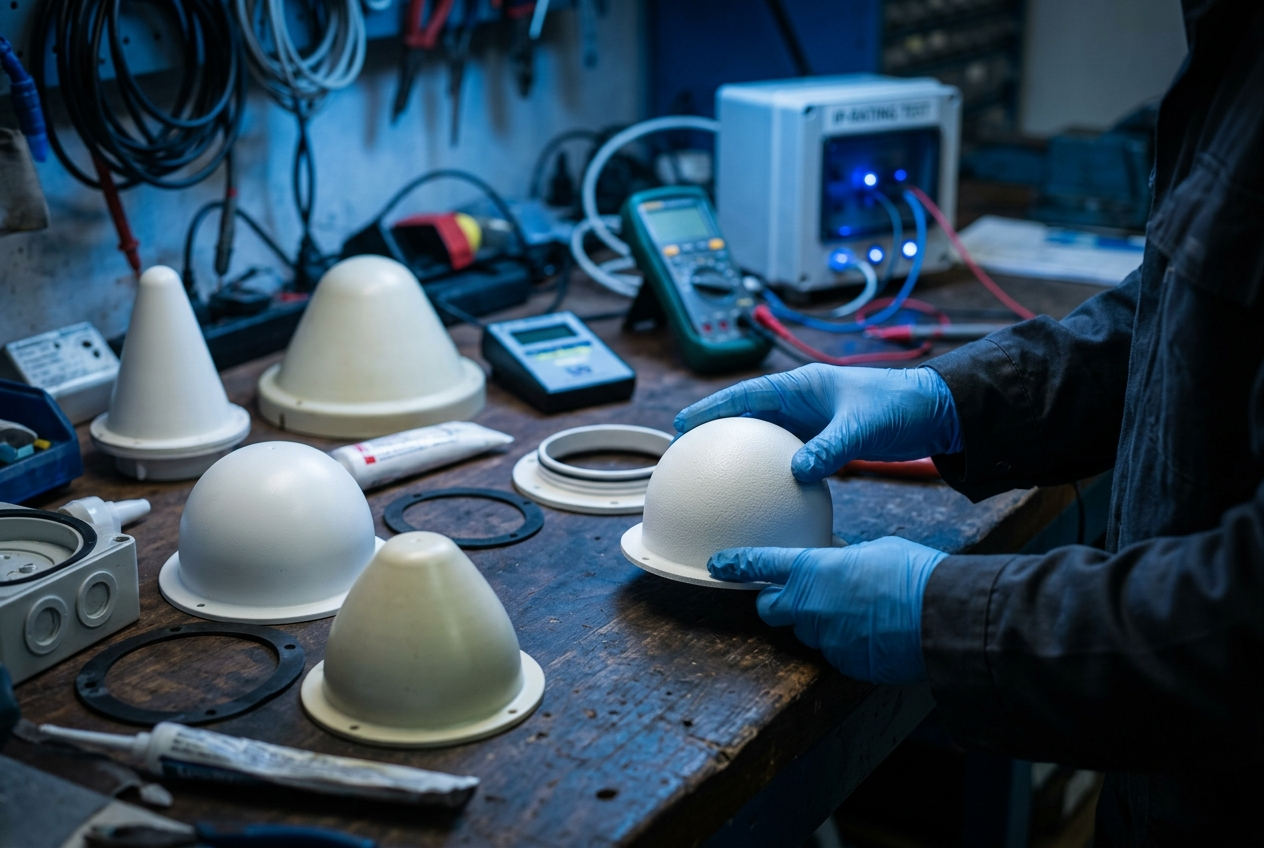
Choosing Antenna Housings and Radomes: Materials, IP Ratings and UV Resistance
A practical guide to radome materials, IP ratings, and UV resistance for specifying durable antenna housings on UK installations.
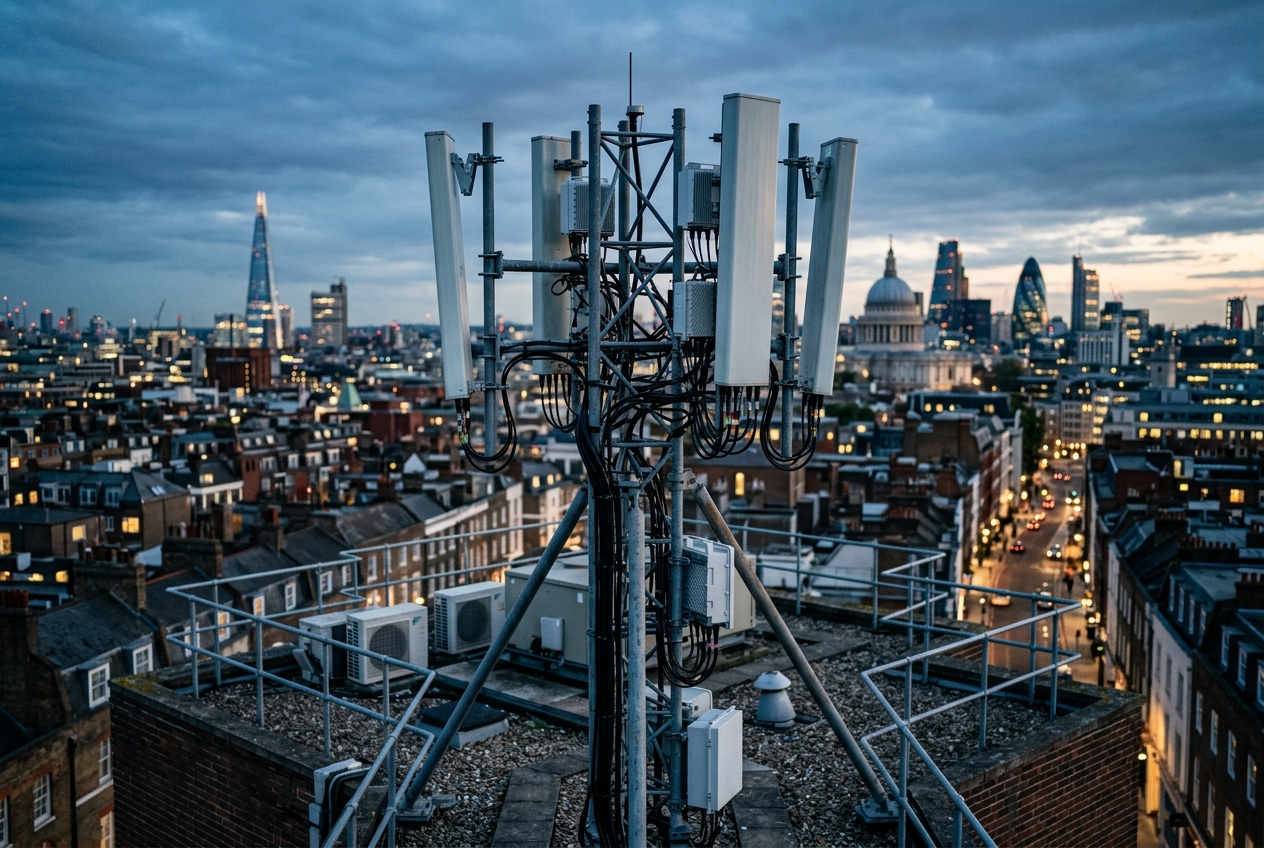
Antenna Diversity and MIMO for Fixed Wireless Access: What UK ISPs Need to Know
How antenna diversity and MIMO improve fixed wireless access performance, and what UK ISPs should specify for reliable, high-throughput deployments.

Preparing Antenna Installations for Autumn and Winter: A UK Storm-Season Checklist
A practical pre-winter checklist for UK antenna installations covering wind loading, weatherproofing, grounding, and post-storm inspection routines.
Our Customers
Lorem ipsum dolor sit amet, consectetur adipiscing elit.
“The team at Renair is always ready to assist, providing expert advice and quality products.”


“Renair’s bespoke antenna solutions have significantly enhanced our system performance.”

“We rely on Renair for all our antenna needs. Their products and service are consistently excellent.”

“Renair’s team provided exceptional support throughout our project, ensuring seamless integration.”

“The quality of Renair’s antennas is unmatched. Our communications have never been clearer.”

“Renair’s customer service is top-notch. They promptly addressed our queries and provided tailored solutions.”


Get in Touch with Us
Contact Renair today for inquiries, partnerships, or to learn more about our solutions.