The UK Emergency Services Network: Where Are We Now?

Few infrastructure programmes in the UK have attracted as much scrutiny — or taken as long to deliver — as the Emergency Services Network. Originally conceived as the successor to the Airwave TETRA network that has served the UK's police, fire and ambulance services since the early 2000s, ESN has been a story of ambition, complexity and repeated timeline revisions. As of early 2026, where does the programme actually stand?
A Brief History
The ESN programme was initiated following a competitive procurement process that saw EE (part of BT Group) appointed as the primary network provider in 2015. The original vision was for ESN to provide a 4G LTE-based mission-critical communications service for approximately 300,000 frontline users across the emergency services, supported by BT/EE's existing national LTE network and purpose-built infrastructure for coverage gaps. The timeline proved optimistic. What was originally targeted for completion in the early 2020s has been repeatedly revised, shaped by technical complexity, contractual issues and the sheer challenge of migrating safety-critical communications infrastructure without disruption to operational users.
The Current Position
As of early 2026, ESN is live and in active use by a growing number of users across all three emergency services. Coverage is expanding, including deployments in road tunnels, the London Underground and marine environments — use cases that required bespoke infrastructure development beyond the standard LTE network.
The Airwave TETRA network — operated by Motorola Solutions — continues to operate in parallel with ESN, with the shutdown date currently set at 31 December 2029. As one industry analysis noted: "The transition to the 4G-based Emergency Services Network is intended to bridge this gap but has faced delays, leaving agencies managing dual systems."
What ESN Delivers
The capability step from TETRA to ESN is substantial. Where TETRA provides reliable mission-critical voice and limited data, ESN supports high-definition video streaming from body-worn cameras, mobile data applications for record checks and mapping, interoperability with Control Room systems via LTE data links, and broadband connectivity for major incident command infrastructure. These capabilities represent a genuine transformation in what frontline responders can do in the field.
Implications for Antenna Specifiers
For the foreseeable future, any emergency services antenna specification needs to address both TETRA and ESN capability. The dual-system reality — TETRA for voice, LTE for data, with an eventual full transition to ESN for both — means vehicle and infrastructure antenna systems that support both frequency ranges are the right specification for new-build and replacement projects.
Vehicle-mount antenna solutions covering TETRA (380–400 MHz) and the LTE bands used by ESN (Band 20 at 800 MHz, Band 3 at 1800 MHz, Band 1 at 2100 MHz) are commercially available. For organisations specifying new emergency services vehicles or upgrading antenna infrastructure, this is the specification baseline.
Contact Renair to discuss antenna solutions for emergency services applications: renair.co.uk/contact-us.
Frequently Asked Questions
Is the ESN ready to replace TETRA for all emergency services in the UK?
Not yet. As of early 2026, ESN is live and in active use but TETRA (Airwave) continues to operate in parallel. The full transition is targeted for completion by end of 2029, subject to programme progress.
What LTE bands does the UK Emergency Services Network use?
ESN primarily uses EE's LTE network on Band 20 (800 MHz), Band 3 (1800 MHz) and Band 1 (2100 MHz). Additional priority and preemption features are built into the ESN service to ensure emergency services users maintain connectivity even in congested network conditions.
Should I specify a combined TETRA/LTE antenna for a new emergency services vehicle?
Yes — for any new build or antenna replacement in the period leading up to the Airwave shutdown, a solution covering both TETRA (380–400 MHz) and the LTE bands used by ESN is the right specification. This avoids the need for a further antenna retrofit when the full ESN transition occurs.
Understanding the Innovative Technologies Behind Our Antenna Solutions
At Renair, we utilise cutting-edge technology to design antennas that excel in performance and reliability. Our manufacturing process incorporates rigorous testing to ensure each product meets the highest standards. This commitment to quality guarantees that our antennas provide seamless connectivity for a variety of applications.
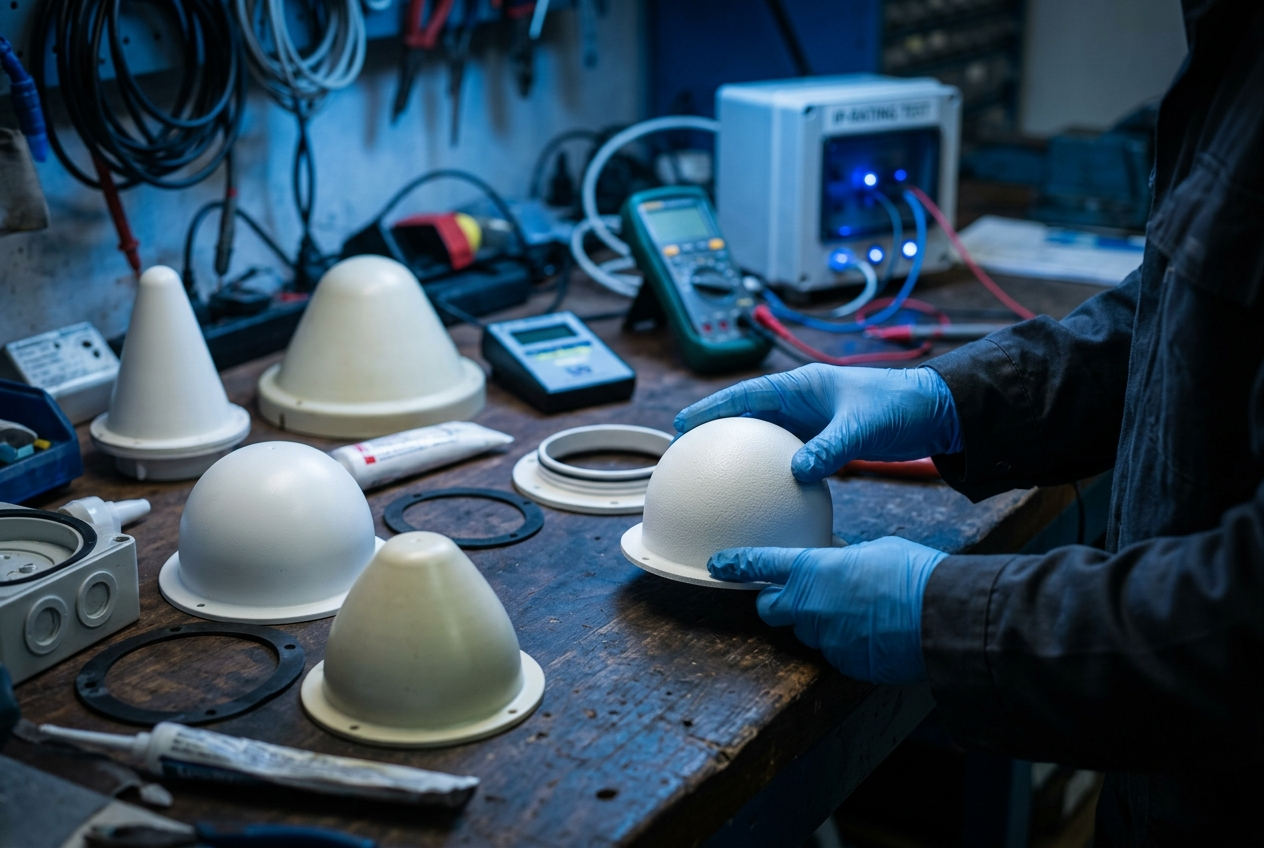
Choosing Antenna Housings and Radomes: Materials, IP Ratings and UV Resistance
A practical guide to radome materials, IP ratings, and UV resistance for specifying durable antenna housings on UK installations.
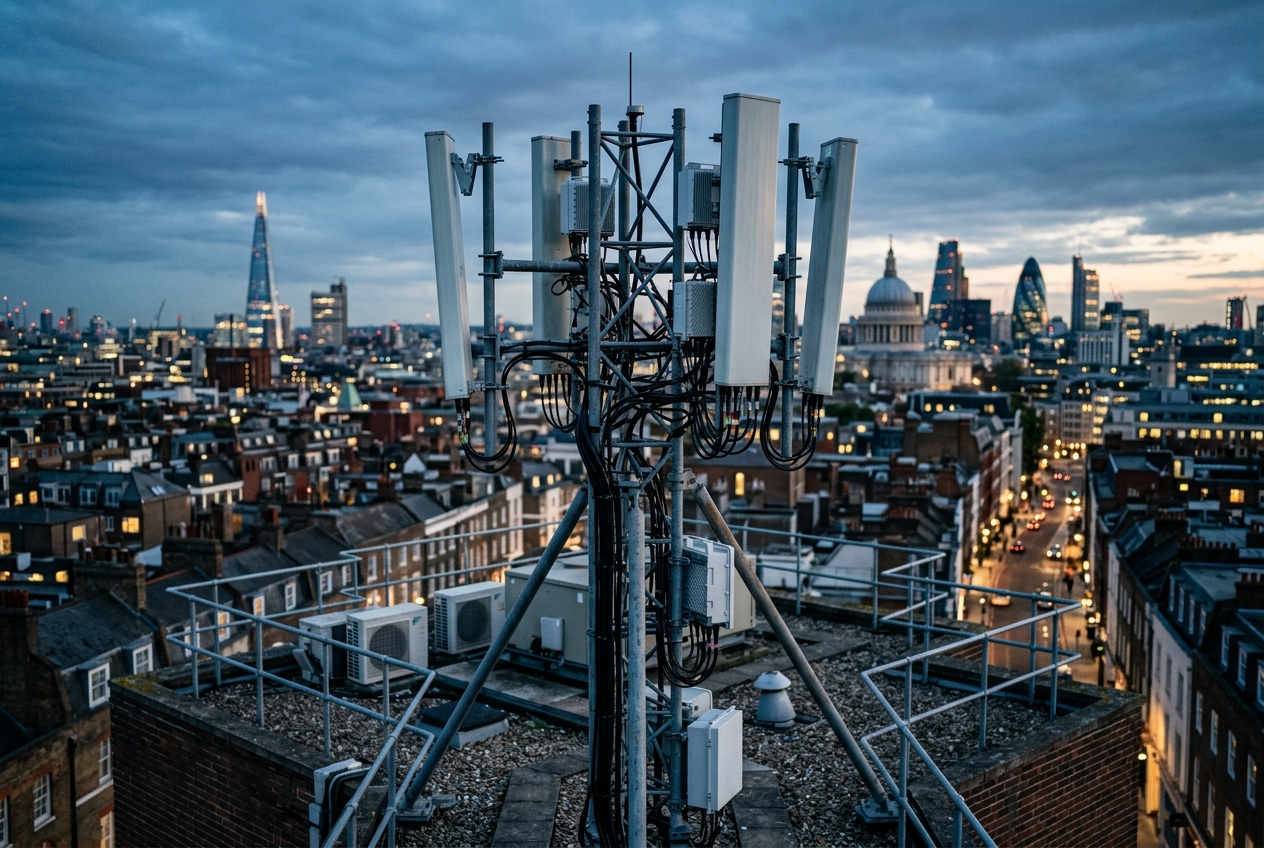
Antenna Diversity and MIMO for Fixed Wireless Access: What UK ISPs Need to Know
How antenna diversity and MIMO improve fixed wireless access performance, and what UK ISPs should specify for reliable, high-throughput deployments.

Preparing Antenna Installations for Autumn and Winter: A UK Storm-Season Checklist
A practical pre-winter checklist for UK antenna installations covering wind loading, weatherproofing, grounding, and post-storm inspection routines.
Our Customers
Lorem ipsum dolor sit amet, consectetur adipiscing elit.
“The team at Renair is always ready to assist, providing expert advice and quality products.”


“Renair’s bespoke antenna solutions have significantly enhanced our system performance.”

“We rely on Renair for all our antenna needs. Their products and service are consistently excellent.”

“Renair’s team provided exceptional support throughout our project, ensuring seamless integration.”

“The quality of Renair’s antennas is unmatched. Our communications have never been clearer.”

“Renair’s customer service is top-notch. They promptly addressed our queries and provided tailored solutions.”


Get in Touch with Us
Contact Renair today for inquiries, partnerships, or to learn more about our solutions.