Best External 4G Antenna for Your Router: A Rural UK Guide

A 4G router can be a lifeline for rural offices, farms, holiday lets and remote sites without fixed broadband. But the small antennas supplied with most routers are a compromise. Indoors, behind thick stone walls or at the edge of coverage, they leave a lot of performance on the table. An external 4G antenna is usually the single most effective upgrade you can make.
Signs Your Router Needs an External Antenna
- Signal bars drop to one or two, or the router flips between 4G and 3G
- Speeds are much lower than the network's coverage checker suggests
- The connection drops in bad weather or at busy times of day
- Moving the router to a window sill makes a noticeable difference
If the last point applies to you, an external antenna will almost certainly help. It takes that window-sill improvement further by getting above walls, hedges and rooflines.
Omni or Directional?
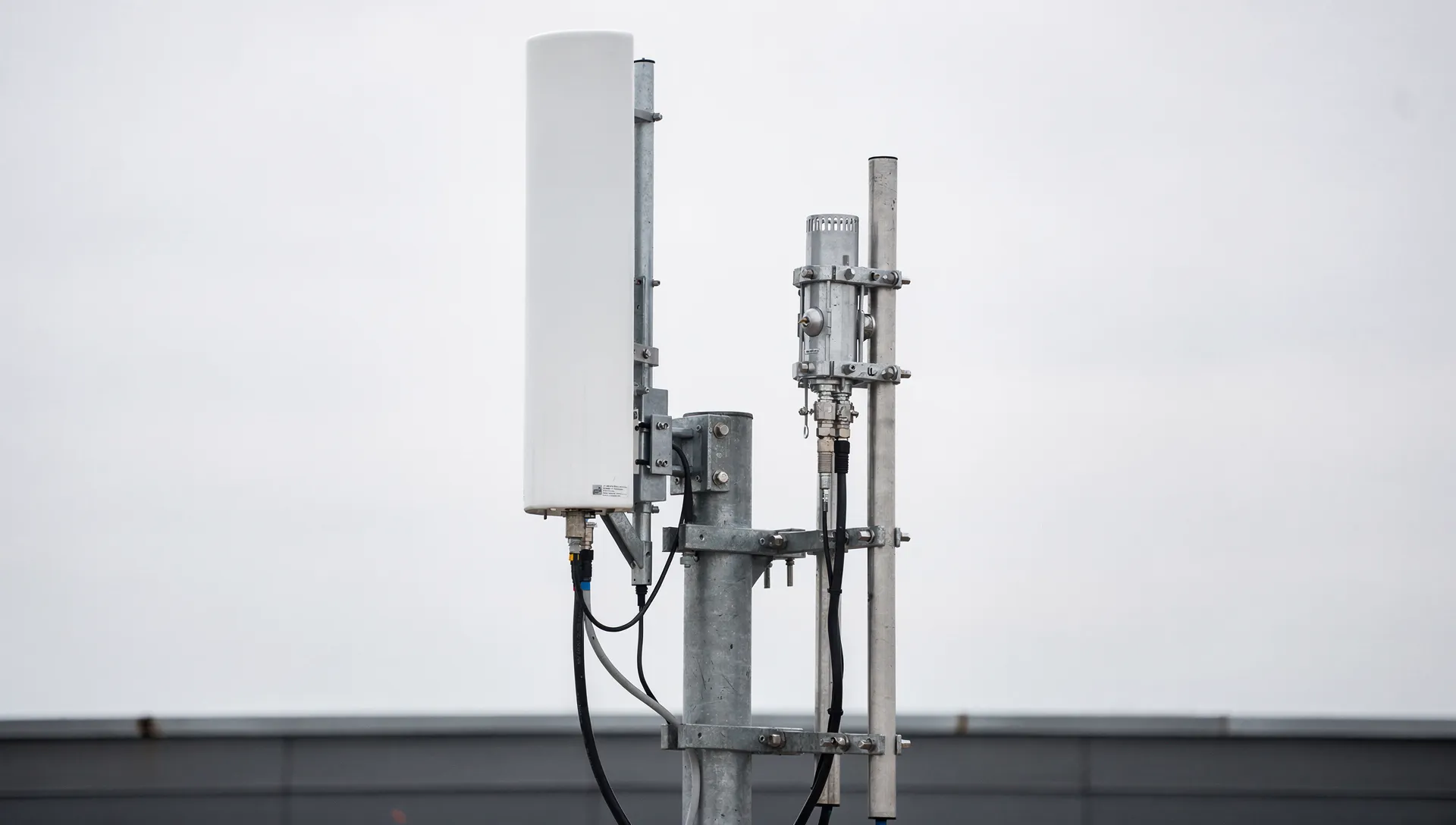
An omnidirectional 4G antenna receives from all directions. It is the simple choice when you have reasonable signal and want a reliable improvement without aiming anything. It also copes if the network switches you between masts.
A directional 4G antenna points at one mast and pulls in more signal from that direction. It is the better choice in genuinely weak areas where the nearest mast is several kilometres away. You will need to know roughly where the mast is, and the antenna needs a clear view in that direction.
Why MIMO Matters
4G uses MIMO (multiple input, multiple output). Most routers have two antenna ports and use both at once to carry separate data streams. Connecting an external antenna to only one port can improve signal but limit speed. For the best results use either two antennas or a single antenna with two cables inside it, often sold as 2-in-1 or MIMO antennas.
Frequency Bands to Cover
UK 4G networks use several bands, including 800 MHz, 900 MHz, 1800 MHz, 2100 MHz and 2600 MHz. In rural areas, 800 MHz (Band 20) does much of the heavy lifting because it travels further and penetrates foliage and buildings better. Choose an antenna that covers the full 698 to 2700 MHz range so it works whatever band your router connects on.
Mounting and Cable
- Height beats everything. Getting the antenna above the roofline or a nearby hedge often adds more than extra gain does.
- Keep cable runs short. At 4G frequencies cable loss adds up quickly. Use low-loss coaxial cable and avoid long coiled spares.
- Check the connectors. Many routers use SMA connectors, some dongles use TS9 and many outdoor antennas use N-type. Adaptors work but each one adds a little loss.
- Weatherproof the joints. Wrap outdoor connectors in self-amalgamating tape.
Recommended Options
- Farm office or rural home: the WAM4G is a long-range multiband 4G wall-mount antenna designed to be fixed to an outside wall.
- Weak signal, open ground: the LTE800WB is a 6 dB high gain glassfibre antenna for mast mounting where range matters.
- Vehicles, kiosks and compact installs: the 2J2124Ba-B17H is a 2-in-1 ground plane independent combination antenna covering 698 to 2700 MHz.
Tell us your postcode, network and router model and we will suggest the right antenna and cable: renair.co.uk/contact-us.
Frequently Asked Questions
Will an external 4G antenna increase my speed?
Usually, yes. A stronger, cleaner signal lets the router use faster modulation and keeps the connection stable. The biggest gains come at sites where the signal is currently weak.
Do I need one antenna or two?
For full MIMO performance, connect both router ports, either with two antennas or one 2-in-1 MIMO antenna.
Is a 4G antenna the same as a 4G booster?
No. An antenna improves the signal your router receives. A mobile signal booster or repeater re-broadcasts the signal and must be an Ofcom-compliant type to be used legally in the UK.
Related products
Related reading
Understanding the Innovative Technologies Behind Our Antenna Solutions
At Renair, we utilise cutting-edge technology to design antennas that excel in performance and reliability. Our manufacturing process incorporates rigorous testing to ensure each product meets the highest standards. This commitment to quality guarantees that our antennas provide seamless connectivity for a variety of applications.

Marine Communication Regulations: What They Mean for Vessel Operators
What GMDSS, its modernisation and maritime cyber risk guidance mean for vessel operators, and what to check across antennas, cabling and mounting before an upgrade.
VHF vs UHF Antennas: Which Do You Need?
The difference between VHF and UHF antennas in plain English: range, terrain, building penetration, antenna size and which sectors use which band.

Do You Need a VHF Radio Licence in the UK? Ofcom Rules Explained
Which licences you need to use a marine VHF radio in the UK: the Ofcom Ship Radio Licence, the Ship Portable Radio Licence and the operator's certificate, plus what changes for land-based VHF.
Our Customers
“The team at Renair is always ready to assist, providing expert advice and quality products.”


“Renair’s bespoke antenna solutions have significantly enhanced our system performance.”

“We rely on Renair for all our antenna needs. Their products and service are consistently excellent.”

“Renair’s team provided exceptional support throughout our project, ensuring seamless integration.”

“The quality of Renair’s antennas is unmatched. Our communications have never been clearer.”

“Renair’s customer service is top-notch. They promptly addressed our queries and provided tailored solutions.”


Get in Touch with Us
Contact Renair today for inquiries, partnerships, or to learn more about our solutions.