Antenna Selection for Body-Worn Public Safety Devices
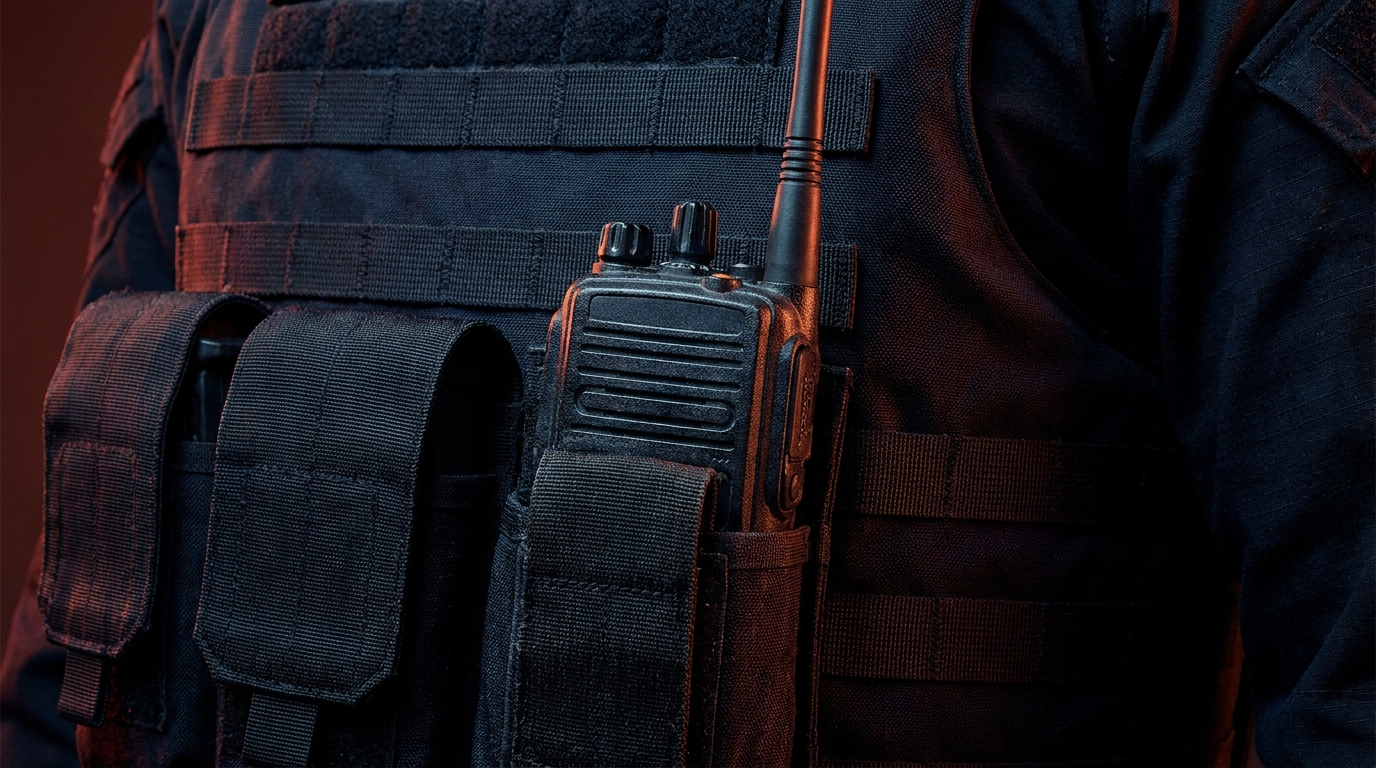
A hard environment for RF
A body-worn radio, camera or personal locator is an unusually difficult RF environment. The antenna is:
- Close to a large, mostly water-filled absorber (the human body).
- Operating at a variable orientation as the user moves.
- Subject to significant mechanical stress, including drops, impacts and shoulder contact.
- Expected to work reliably across a very wide range of locations, indoors and outdoors.
All of this has implications for how you choose the antenna.
Key specification points
Form factor
Low-profile helical or embedded antennas dominate body-worn applications. A long, protruding whip is a snag hazard and an officer-safety issue. The challenge is getting the RF performance of a whip into the footprint of a helical or PCB-mounted antenna.
Multi-band support
Modern body-worn devices often combine TETRA or DMR, LTE for data, GNSS for location and sometimes Bluetooth or Wi-Fi for peripherals. The antenna story usually requires multiple elements in a single physical package, with careful isolation between them.
Human body detuning
Good body-worn antennas are designed to work in the presence of a human body, not in free space. Look for test data that specifically addresses human body detuning, ideally using a phantom or in-situ measurement. Antennas characterised only in free space will underperform when worn.
Durability
IP67 at a minimum, with sealed connectors and robust over-moulded cable entries. Drop testing should be specified on the datasheet. For frontline public safety roles, MIL-STD-810 environmental testing is a useful additional benchmark.
Testing matters
More than in most categories, datasheet performance in body-worn is different from in-service performance. Where possible, test sample devices in realistic conditions before committing to a force-wide rollout. Live radio tests in target buildings are always worth the effort.
Consider testing across the full range of user positions: standing, crouching, in a vehicle, and next to a wall. The weakest scenario usually sets your coverage planning baseline.
Renair's position
We supply a range of compact and body-worn antennas suitable for public safety applications across TETRA, LTE public safety and combined-band use cases. For force-wide rollouts, we support sampling and evaluation, as well as bespoke adaptation where required. Email sales@renair.co.uk with the device details and we will recommend the shortest path to evaluation units.
Understanding the Innovative Technologies Behind Our Antenna Solutions
At Renair, we utilise cutting-edge technology to design antennas that excel in performance and reliability. Our manufacturing process incorporates rigorous testing to ensure each product meets the highest standards. This commitment to quality guarantees that our antennas provide seamless connectivity for a variety of applications.
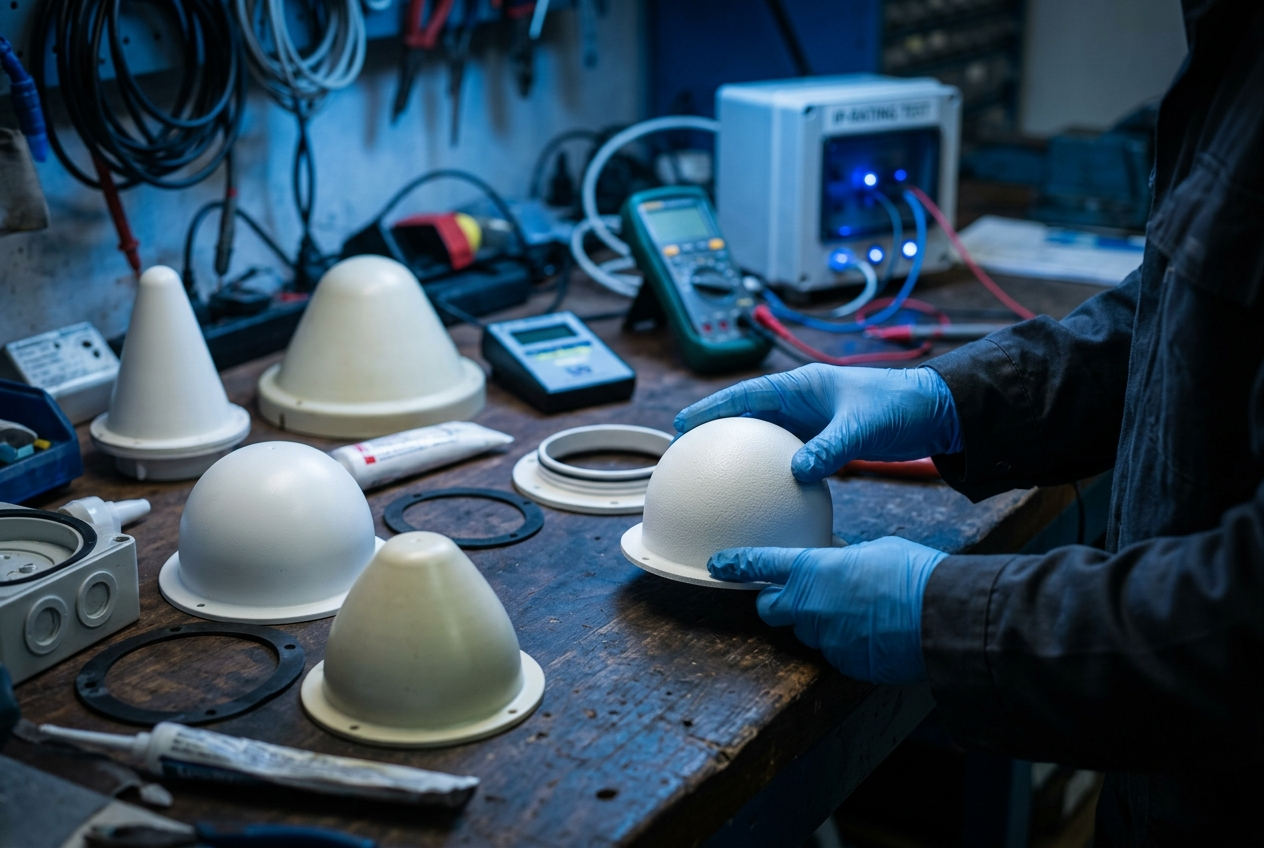
Choosing Antenna Housings and Radomes: Materials, IP Ratings and UV Resistance
A practical guide to radome materials, IP ratings, and UV resistance for specifying durable antenna housings on UK installations.

Antenna Diversity and MIMO for Fixed Wireless Access: What UK ISPs Need to Know
How antenna diversity and MIMO improve fixed wireless access performance, and what UK ISPs should specify for reliable, high-throughput deployments.

Preparing Antenna Installations for Autumn and Winter: A UK Storm-Season Checklist
A practical pre-winter checklist for UK antenna installations covering wind loading, weatherproofing, grounding, and post-storm inspection routines.
Our Customers
Lorem ipsum dolor sit amet, consectetur adipiscing elit.
“The team at Renair is always ready to assist, providing expert advice and quality products.”


“Renair’s bespoke antenna solutions have significantly enhanced our system performance.”

“We rely on Renair for all our antenna needs. Their products and service are consistently excellent.”

“Renair’s team provided exceptional support throughout our project, ensuring seamless integration.”

“The quality of Renair’s antennas is unmatched. Our communications have never been clearer.”

“Renair’s customer service is top-notch. They promptly addressed our queries and provided tailored solutions.”


Get in Touch with Us
Contact Renair today for inquiries, partnerships, or to learn more about our solutions.